Small commercial real estate in Sulphur can look simple at first glance, but the right deal often comes down to details that are easy to miss. If you are buying for your business or investing for income, you need more than a price and a square-foot count. You need to understand how Sulphur works as a market, which property types fit local demand, and how zoning, taxes, and approvals can shape your return. Let’s dive in.
Why Sulphur stands apart
Sulphur is a smaller market than nearby Lake Charles and Lafayette, with an estimated population of 20,492 as of July 1, 2025. That smaller size matters because demand often follows major roads, established business corridors, and local relationships rather than broad citywide patterns.
For you, that means location strategy is often more corridor-based than it would be in a larger city. A property on or near a well-traveled route may perform very differently from a similar building in a less active pocket.
Sulphur’s planning framework also gives useful clues about how the city sees growth. Current land-use categories include Residential, Mixed Residential, Mobile Home, Business, Commercial, Industrial, and the I-10 North Frontage Road Overlay District, which is intended to support economic development, protect infrastructure investment, preserve an inviting gateway image, and help preserve property values.
Where small commercial activity concentrates
Sulphur’s planning documents describe commercial activity as concentrated along major streets and the three I-10 exchanges. They also note light industrial pockets north of Napoleon Street, which helps explain why certain uses tend to fit better in some parts of the city than others.
The same documents point to vacant commercial structures and underutilized strip centers. For buyers and investors, that creates potential opportunity in infill projects, repositioning plays, and value-add properties where the location still makes sense but the building may need a clearer use or updated presentation.
The local economy is described largely as service-oriented, supporting a residential community. That includes retail, medical services, small insurance agencies, and similar everyday uses, along with mostly light industrial establishments that support the region’s larger industrial base.
Property types that make sense in Sulphur
Strip centers
Neighborhood strip centers deserve attention in Sulphur because the city has already identified underutilized strip centers and commercial corridors. In a market like this, small retail and service space can work well when it serves daily needs and offers easy access and parking.
These properties may appeal to convenience retail, service businesses, med-spa concepts, and some medical-office users depending on location and zoning. The key is matching the tenant mix to real local traffic patterns rather than assuming broad regional draw.
Standalone office or retail buildings
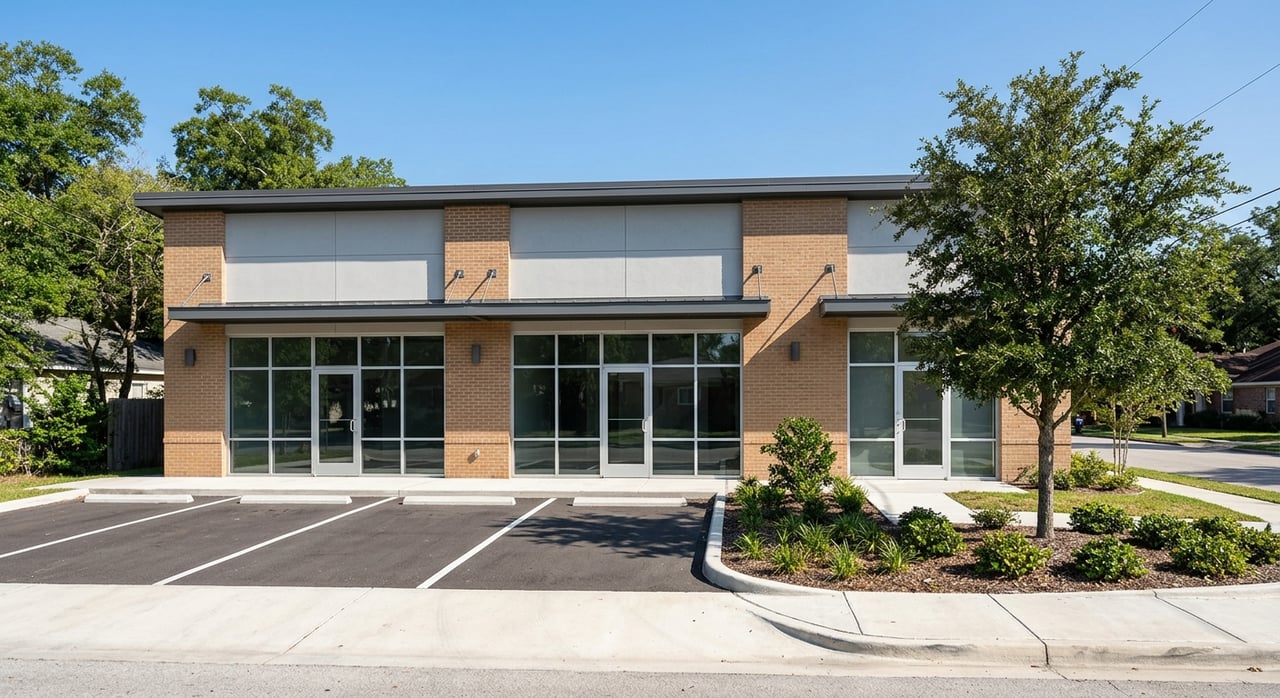
Standalone buildings can be a strong fit when visibility matters more than walkability. If your business depends on signage, direct road access, or simple customer parking, this format can be easier to position than a deeper multi-tenant center.
This is especially important along high-profile corridors. In the I-10 frontage overlay area, the city applies site and design rules that include hard-surface parking, permitted facade materials, and sidewalk requirements, which signals that appearance and site quality matter along that gateway corridor.
Light industrial and warehouse space
Light industrial and small warehouse properties are part of Sulphur’s real commercial mix. The city’s planning documents describe mostly light industrial establishments that support heavy industry in the wider region, and Sulphur’s land-use ordinance includes an Industrial district.
For you, that can open the door to contractor space, service yards, support-industrial buildings, and small warehouse uses. These properties can perform very differently from retail or office, so due diligence should focus closely on allowed use, site function, and access.
Medical-office and service properties
Medical-related space stands out in Sulphur more than many buyers first realize. The city identifies West Calcasieu Cameron Hospital, physician offices, and related medical services as important anchors, with a medical-services corridor along Cypress Street.
That makes some medical-office and service-oriented properties worth evaluating through a different lens than standard office space. In some cases, they may act more like stable service real estate tied to ongoing community needs.
Lease structure matters as much as rent
When you compare small commercial properties, base rent alone does not tell the full story. Your return, or your occupancy cost, often depends on who pays taxes, insurance, maintenance, and shared-area expenses.
In practice, you will usually see three common structures:
- Full-service lease: The landlord typically covers expenses like taxes, insurance, repairs, maintenance, utilities, and janitorial.
- Triple-net lease: The tenant typically pays taxes, insurance, and common area maintenance in addition to base rent.
- Modified gross lease: Costs are split in a negotiated way between landlord and tenant.
In a market like Sulphur, this matters because operating expenses can shift the real economics of a deal fast. Two properties with similar asking rents may produce very different net operating income once pass-throughs and owner obligations are fully understood.
Taxes and carrying costs to review early
In Calcasieu Parish, commercial property is assessed at 15% of fair market value, while commercial land is assessed at 10%. Millage varies by location and taxing authority, and parish tax bills are typically mailed around November 15 and due December 31.
That makes parcel-specific tax review an early step, not an afterthought. If you are buying a value-add asset or planning a tenant change, you should understand how taxes fit into your projected holding costs and whether the lease structure properly accounts for them.
If a tax issue comes up, Calcasieu Parish uses a Board of Review process followed by the Louisiana Tax Commission appeal path. That does not mean every buyer will need an appeal, but it does show why accurate property-level review matters before you close.
Sulphur approvals can shape your timeline
One of the biggest mistakes in small commercial real estate is assuming a property can be used right away just because it looks like a fit. In Sulphur, timing around approvals can affect carrying costs, build-out schedules, and lease-up plans.
The city requires a business license for each location. Applicants are also asked to verify that the property is properly zoned before opening, and a certificate of occupancy is required before a new business can open.
Sulphur’s Land Use Commission regulates height, bulk, density, and land-use location, and it recommends zoning and variance actions to City Council. The city also publishes monthly Land Use and Board of Zoning Adjustment meetings, which means approvals can become a real calendar issue for buyers, landlords, and business owners.
A smart Sulphur due diligence checklist
Before you buy or lease a small commercial property in Sulphur, focus on the items that can change the deal economics most.
- Verify the current zoning and whether the intended use is allowed.
- Check whether the property falls within the I-10 North Frontage Road Overlay District.
- Review any site or design rules that may affect renovations or occupancy.
- Confirm business license timing for the specific location.
- Confirm certificate of occupancy requirements and likely timing.
- Review parcel-specific tax treatment and expected annual carrying costs.
- Study the lease structure and who pays each operating expense.
- Identify any use-specific building or site requirements before closing.
A disciplined review up front can help you avoid delays that eat into cash flow or slow a business opening.
How Sulphur compares nearby
It helps to view Sulphur in context. Lake Charles has a stronger industrial and logistics identity, supported by a diverse industry base and the Port of Lake Charles, a deepwater seaport with industrial parks and leasable port-owned sites.
Lafayette is different again. With a much larger estimated population of 123,311 as of July 1, 2025, it supports a broader consumer base and a more layered mix of neighborhood retail, office, mixed-use, and development categories.
Sulphur is not trying to be either one. Based on its planning and economic-development documents, Sulphur is often best suited to neighborhood service uses, medical-office space, and light industrial support properties that fit local travel patterns and corridor demand.
What this means for buyers and investors
If you are looking at small commercial real estate in Sulphur, the best opportunities are often the ones that align with how the city already functions. That may mean a strip center with room for repositioning, a standalone building on a strong corridor, a small warehouse for a service business, or a medical-related property near established anchors.
The strongest deals are usually not just about a low price. They are about fit, timing, lease economics, and a clear path through zoning and occupancy requirements.
If you want local guidance that is responsive, practical, and rooted in real knowledge of Southwest Louisiana, Reign Realty is here to help you evaluate small commercial opportunities in Sulphur with clarity and confidence.
FAQs
What types of small commercial properties are common in Sulphur?
- Common property types in Sulphur include strip centers, standalone office or retail buildings, light industrial or warehouse properties, and some medical-office or service-oriented buildings.
What makes Sulphur different from Lake Charles for commercial real estate?
- Sulphur is a smaller, corridor-based market that tends to fit neighborhood service, medical-office, and light industrial support uses, while Lake Charles has a stronger industrial and port-linked identity.
What should you verify before opening a business in a Sulphur commercial property?
- You should verify zoning, confirm any overlay-district requirements, review business license timing, and make sure you understand certificate of occupancy requirements before opening.
Why does lease structure matter in Sulphur commercial real estate?
- Lease structure matters because your actual cost or return depends on who pays taxes, insurance, maintenance, and shared expenses, not just the base rent.
Are underutilized strip centers worth considering in Sulphur?
- They can be, especially for value-add or repositioning strategies, because Sulphur’s planning documents specifically note underutilized strip centers and vacant commercial structures as part of the local landscape.