During the week of Sept. 21, two representatives of Orion Renewable Energy Group knocked on doors in east Moss Bluff. They said they were gathering community feedback on the proposed Persimmon Energy Center, and they left a brochure. According to the American Press, one resident who lives about five miles from the site received a brochure claiming the area would see property tax reductions of 22 to 27 percent.
The project website also describes payments tied to distance from the project boundary.
The tax figures changed with each brochure
The American Press reported that July brochures projected property tax reductions of 16 to 31 percent for Wards One and Six. Later materials gave about 22 percent for Ward One, about 27 percent for Ward Six and about 7 percent for the rest of Calcasieu Parish.
The project's size and cost estimates have changed too:
| What was stated | Earlier figure | Current figure |
|---|---|---|
| Investment | $1.7 billion, per KPLC in August 2026 | $2.4 billion, per the project website |
| Generating capacity | Up to 1,000 MW, per KPLC in August 2026 | 762 MW, per the project website |
| Ward One tax reduction | 16% in July brochures | About 22% in later materials |
| Ward Six tax reduction | 31% in July brochures | About 27% in later materials |
District One Police Juror Darby Quinn told the American Press that parish staff met with Persimmon representatives in late September. According to Quinn, the representatives "could not or would not give any documentation providing any support for their claims of tax reductions" and were advised to stop making the claims until they had supporting evidence. Quinn also said that without a project map, the parish can't determine the project's true tax value, and that "this project will not result in any direct tax reduction as it is being described."
Louisiana's millage rate guide
Louisiana's Legislative Auditor publishes a guide to setting millage rates, updated in August 2026. It explains that the constitution requires millages to be adjusted up or down at reassessment, which happens at least every four years. According to the guide:
- When taxable property values rise at reassessment, the millage rate drops so the taxing body collects the same dollars it collected the year before.
- When values fall, the millage rate rises to keep collections the same.
- Property going on the tax rolls for the first time is left out of the taxable valuation used in that calculation.
- Each millage is adjusted on its own.
The guide also says that after reassessment lowers a rate, a taxing body may roll the millage forward as high as the prior year's maximum, provided it holds a public hearing and a public meeting to adopt the rate.
The project's own website takes a more cautious line than its brochures. It says:
"Beyond energy production, new tax revenues benefit taxpayers – whether that means reducing the tax burden, providing more support for essential services, or investing in other community priorities."
The same site puts the project's local property tax payments at about $26 million a year on average. At an August 6 Rotary Club of DeQuincy luncheon, an Orion representative said the Persimmon project is not eligible for Louisiana's Industrial Tax Exemption Program, according to The DeQuincy News. That would make it different from the plants near Westlake, where most of the property tax is abated. But the size of the payment and what happens to homeowner bills are separate questions.
The payments that depend on distance from the project
The project website describes the voluntary Solar Neighbor Program, which offers annual payments to residences within one-third of a mile of the project that aren't owned by a participating landowner. According to the site, payments begin at the start of construction, continue for the life of the project and increase 30 percent every 10 years.
The DeQuincy News reported the amounts from the Rotary presentation: $5,000 a year for homes adjacent to the project and $2,500 a year for homes one-third of a mile away.
Orion hasn't published the project boundary.
The website also lists signed funding agreements with local public bodies:
| Recipient | At start of construction | Annually |
|---|---|---|
| Ward 1 Fire | $125,000 | $100,000 |
| Ward 6 Fire | $125,000 | $100,000 |
| Ward 6 Rec | $500,000 | $100,000 |
These payments are written into agreements and tied to a construction start, which makes them more concrete than any projected percentage cut.
What the parish ordinance requires next to homes
Calcasieu Parish adopted its solar facility ordinance, Ordinance No. 7546, on Dec. 1, 2022. It created Sec. 26-99 of the parish code. Here's what the adopted text requires along the edge facing a neighbor who isn't part of the project:
- A setback of at least 50 feet from the property line of an adjacent non-participating parcel.
- Perimeter security fencing placed at least 25 feet from that parcel or from a public street right-of-way. The fencing may sit within the setback but not in the landscape buffer.
- A year-round visual landscape buffer at least 25 feet deep, with a plan stamped by a licensed landscape architect or horticulturalist. Where the buffer lacks existing vegetation in an A-1 district, plantings must reach 80 percent opacity by year five.
- A notarized decommissioning plan with an engineer's cost estimate, plus a surety bond equal to 125 percent of decommissioning cost net of salvage value, posted at least 30 days before construction begins.
In A-1 districts, a solar facility needs a zoning exception. The Planning and Zoning Board decides it, and the board's decision can be appealed to district court. On its website, Orion says the participating land is in timber production and that it would keep existing trees and growth in a strip about 50 feet wide along adjacent roads and property lines as a visual screen.
Where the project stood heading into November
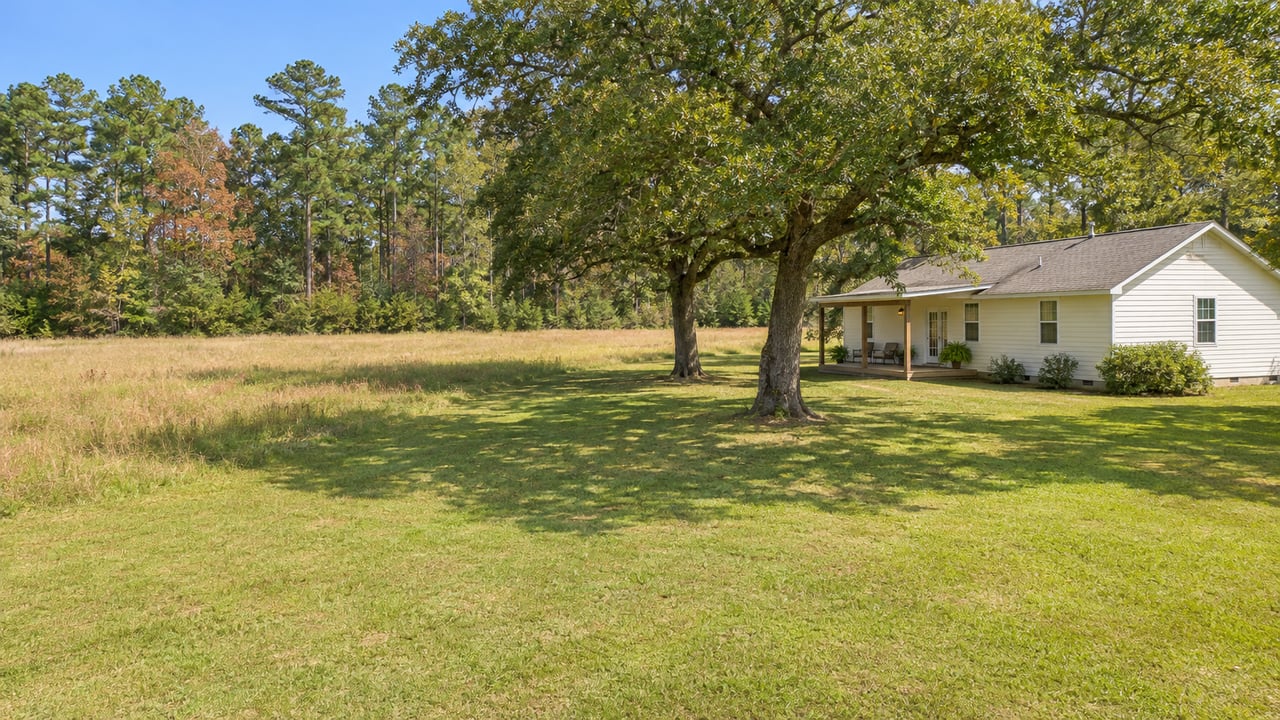
Orion says the project is not in Moss Bluff itself. According to the company, the site is entirely timberland, and its closest edge is more than 1.5 miles north of Joe Miller Road and mostly west of North Perkins Ferry Road. KPLC found at least nine leases running 30 to 37 years, plus a purchase agreement and a number of right-of-way and servitude agreements. Landowners told the station the leases include option periods.
In its Oct. 3 report, the American Press said no permit application had been filed. The Planning and Zoning Board's Oct. 13 agenda had no solar case, and neither did the agenda posted for its Nov. 17 meeting. In August, KPLC reported that Orion expected to begin the special exception process before the end of 2026. State Rep. Brett Geymann shared a NextGen poll that, according to the American Press, found more than 87 percent of Moss Bluff residents oppose the solar farm.
A second proposal on nearby land faces a different obstacle. KPLC reported that Azimuth Renewables holds an option on more than 1,100 acres north of Coffey Road, between Paul White and North Perkins Ferry roads, and is exploring a data center there. Joseph Booth, the Police Jury's communications director, told the American Press that no parish land-use ordinance allows data centers in unincorporated areas, and that there was no timeline for bringing one forward.
This post is general information, not legal, tax or financial advice. If you're weighing a specific property, please confirm your situation with the assessor's office, a tax professional or an attorney.
If you're looking at a home north of Moss Bluff, Reign Realty will follow the parish filings with you and let you know when an application actually reaches the Planning and Zoning Board.